Saturday, January 27, 2007

STOP CLIMATE CHANGE?


STOP CLIMATE CHANGE?

You can protect the future for your grandchildren...
But only if you ACT NOW!


POLITICIANS CAN'T DO IT!
SCIENTISTS CAN'T DO IT!
ONLY YOU CAN!


"Uamby"
RMB 384 Uamby Rd
Goolma NSW 2852

Sunday 10.11am

Dear Friend,

I am just a farmer. I'm no scientist, but I do know about the weather. Something has gone seriously wrong. As I write, there is another bush fire out of control, just 30-odd kilometres to the north west of us. Yesterday the temperature gauge hit the low 40's - well into the 100s farenheidt. Today it's 22°C. We're suffering in the worst drought in 1000 years. The bores are running dry. And at Christmas we got a massive hailstorm. The weather seems to have lost its mind.

Tsunamis, cyclones, heat waves, wind storms... nothing's normal anymore. We're told the ice cap at the North Pole is melting so fast that experts are afraid the polar bears will drown. That's right, drown... Polar bears will drown as the Arctic Circle melts


What will happen to the rest of us? No one can tell. America - the world's biggest emitter of CO2 - refused to join the rest of the world in using the carbon credits system to cut back the CO2 pollution. Australia was the only other country to do so.

State governments, big companies, members of their own political parties... everyone is pleading with George W. Bush and John Howard to ACT NOW to save the future for our grandchildren. George Bush has another 2 years as President. The world can't wait that long. You can't wait. I can't wait. (Just now, my 4-year-old grandson Xavier came into the room asking for a lolly. It breaks my heart to think that I may not be there to help him when the worst happens. I have got to do something... now.)

That's why I thought of you and all the people like you who love children and worry about what will happen to them.

BUT WHAT CAN I DO?

YOU CAN DO A LOT:
1. You can talk to people about your worries to get them thinking about it.
2. You can call your MP and write to PM Howard.
3. You can neutralise the CO2 you release into the atmosphere when you use electricity or drive a car or buy CO2-heavy products.

But don't just buy any carbon credits. BUY SOIL CARBON CREDITS. They are the only carbon credits that can do something serious about the Climate Change problem in the time that we have left.

SOILS CAN SAVE THE WORLD!

In 2005, we were chosen as among the 10 most innovative farm families in the Central West of NSW and trained throughout the next 12 months in the POWER of SOILS. And we discovered that agricultural soils are the only way to remove the trillions of tonnes of CO2 out of the atmosphere and avert a global catastrophe in the short time we have left.
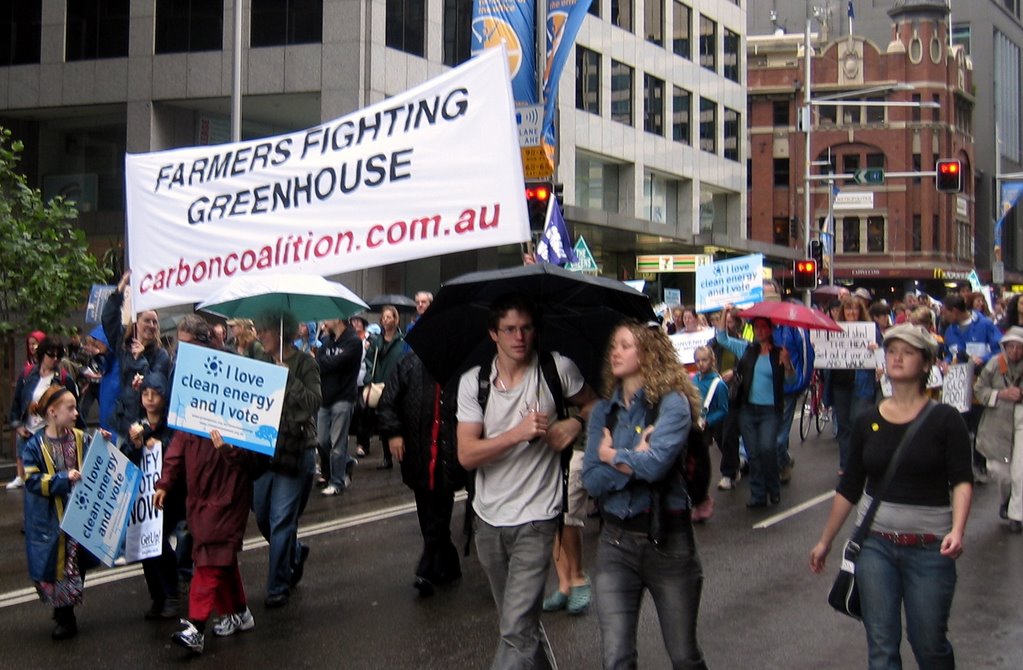
We formed a farmers' movement called the Carbon Coalition Against Global Warming to recruit farmers to fight the battle against Climate Change. We were helped by many good people, and the Coalition is now 500 strong and growing. We paid our own way to America to meet the global warming experts there last October. We've met the experts here. They all agree with us. Only soils can save us. Forests can't do it in the time. (The world couldn't plant enough trees fast enough. Trees can't grow fast enough to do the job. And the cost of the planting is more than anyone is willing to pay.)

Agricultural soils are ready, willing and able. 60% of the earth's surface is used for grazing animals. Soil is already the biggest carbon "sink" we can control. All it would take is a change in the way farmers farm to start eating into the massive overload of CO2 in the air.


If we were able to increase soils carbon just 1% in only 10% of Australia's agricultural soils, we could 'sequester' or extract from the air 10 years' worth of our emissions. Do it 4 years in a row and that's 40 years' worth of emissions.


HOW CAN AUSSIE FARMERS FIGHT GREENHOUSE

Australian farmers can combat global warming by changing the way they farm. There is an entirely new way of farming called "CARBON FARMING" which absorbs CO2 from the atmosphere. But farmers need to be taught about it and incentivised to change - by being offered carbon credits for the carbon they absorb.

HELP THE CARBON COALITION SPREAD THE WORD TO FARMERS

Speading the word about Carbon Farming: We spend many hours meeting with farmers

We are travelling all over the country teaching farmers about how to become Carbon Farmers - how to change the way they farm so that their soils will absorb more CO2. But they need to be given the carbon credits in the same way forest owners are. We have an order from the Chicago Climate Exchange for the first soil carbon credits. We need your help to get started.

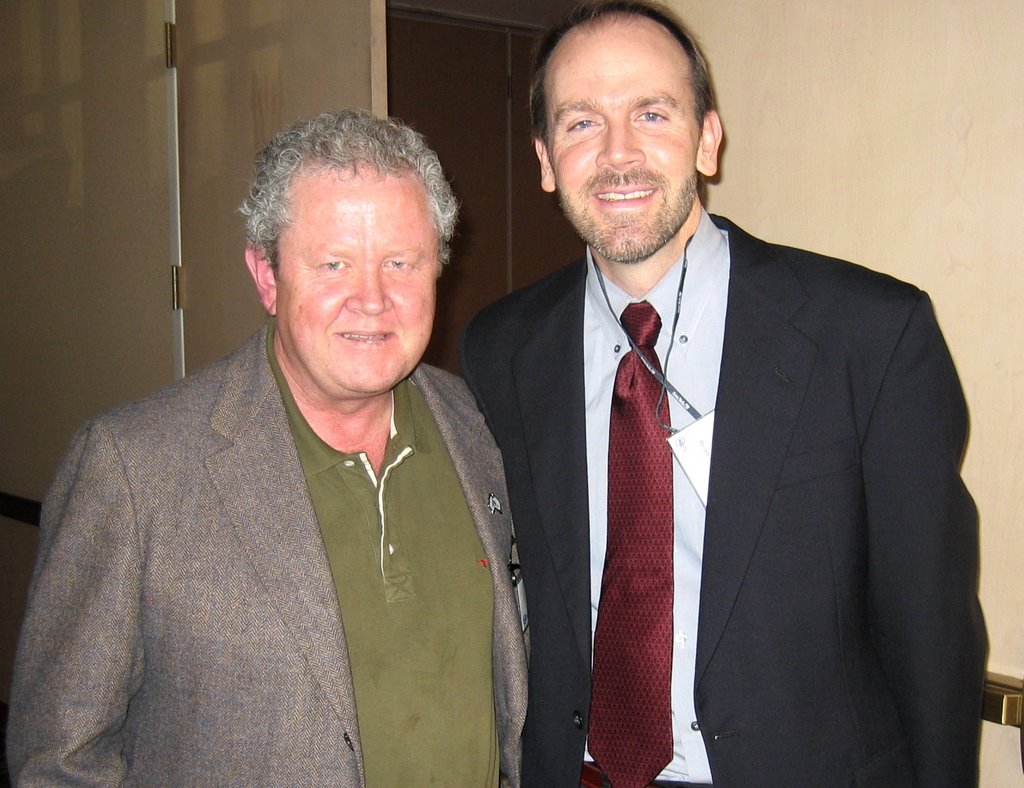
The Carbon Coalition meets with the National Farmers Federation CEO David Crombie who supports our mission


STRIKE A BLOW AGAINST CLIMATE CHANGE!
This is your chance to buy the first Soil Carbon Credits ever sold in Australia. These Credits can be used to 'offset' the emissions you and your family make everytime you switch on a light or cook a meal or drive the car or fly in an aircraft.

They are not simply "Carbon Credits". Remember: most other carbon credits do not do anything about the massive overload of CO2 in the atmosphere that is causing global warming. They only prevent new emissions adding to it. SOIL can 'sequester' carbon - using plants to breathe in the CO2 during the day, separate the Carbon and the Oxygen which is released at night while the Carbon is trapped in the soil.

But more than that, SOIL Carbon Credits also preserve the environment by rewarding farmers for 'conservation farming'. Carbon Farming builds richer, more nourishing soils, that in turn provide the best environment for bugs and worms and insects, and these bring the native birds and the little native animals like Quolls, and more wallabies and kangaroos. And bountiful pasture so there is plenty of grass for them and the farmer's sheep and cattle.
CARBON FARMING: FLOURISHING HEALTHY GRASSY WOODLAND PASTURES

There is less erosion and less salination, less water lost to evaporation. More trees because they encourage soil carbon and they take up CO2 as well. Carbon Farmers cooperate with Nature. Carbon credits pay them to protect and defend the ecology while fighting Climate Change.
"EXTRACTIVE" FARMING IS A FORM OF MINING: HEAVILY ERODED AND DEGRADED FARMLAND


HOW DO WE MEASURE SOIL CARBON FOR CREDITS?
We don't use complicated models that only an actuary could understand. There is uncertainty in precisely how much carbon is sequestered by every technique. All models are based on agreed estimates and averages. Not ours.

The SOIL CARBON CREDIT is based on the following factors:

1. The history of soil management for the plot in question.
2. The history of soil management for the entire property.
3. The training record of the land manager.
4. The land management techniques used on the entire property.
5. The imputed increase in soil carbon in the plot in question over the period since the change in land management.
6. Membership of Carbon•Farmers™, a group of conservation land managers who are also actively working to restore the natural resource base.

NB. When the politicians and scientists finally catch on to the danger we are facing and the need for soil carbon credits, we will have a new system that accurately measures out the Carbon 'sequestered'. But we can't afford to wait for them. In the words of Professor Stuart Hill, UWS, "If you get tangled up in measurement you will sink into a quagmire and never achieve your goal."

YOU GET MORE THAN CO2 REDUCTION
You get more than carbon credits when you buy from Carbon•Farmers™. You help support the work of the Carbon Coalition Against Global Warming which is promoting the benefits of soil carbon credits and teaching farmers about Carbon Farming. The Convenors Michael & Louisa Kiely, carry the word far and wide, from Cobar to Kingaroy to Gloucester and beyond. They speak at conferences and to the media. They meet with politicians and scientists to argue the case for soil carbon credits.


When you buy carbon credits from Carbon•Farmers™, you support the work of the Carbon Coalition Against Global Warming. The money doesn't just go to reward smart merchant bankers who invest in plantation forests and other dubious projects.
.


HOW TO BUY SOIL CARBON CREDITS

Simply use the online payment system below. If you have questions, call Carbon•Farmers™ on (612) 6374 0329.

Why other solutions can't act fast enough


WHY OTHER SOLUTIONS WON'T WORK FAST ENOUGH


Forests

• Not enough forests could be grown in the world to sequester enough CO2 in the next 10-30 years.

• Forests are an expensive option compared to soil.

• "Forests" used for CO2 sequestation are not natural forests. They are plantations or tree farms. They can reduce biodiversity.


Clean Coal

• Clean Coal means burning coal and ‘scrubbing’ the CO2 out of the emissions before they reach the atmosphere.

• Scrubbing intercepts only new CO2 emissions. This makes no impact on existing CO2 loads in the atmosphere which must be ‘sequestered’ quickly to prevent the global temperature rising above the 2°C level already predicted to result from CO2 emitted years ago.

Geo-sequestration

• Geologic sequestration means the burial of liquid CO2 (obtained from scrubbing) deep underneath rock formations underground, including exhausted oil wells and coal seams.

• As with Clean Coal, Geo-sequestration can only deal with new emissions, not the existing atmospheric load that is driving the global temperatures up.

• The public acceptability of trillions of tones of liquid CO2 being pumped under the earth when scientists are not sure what the long term security of these caches is doubtful, given that any leakage can have deadly results for life above ground.

Deep ocean burial

• The US Government is planning to pump trillions of tones of CO2 into deep ocean trenches.

• As with Clean Coal and Geologic Sequestration, this solution addresses only new emissions, not the existing atmospheric load.

Solar energy

• Alternative and renewable energy sources cannot impact on the CO2 already in the atmosphere.

• They can reduce future CO2 emissions.

Wind turbines

• Wind generation of electricity does not sequester CO2 already in the atmosphere.

• They can only reduce future CO2 emissions.

Long life light bulbs

• Low power light bulbs can reduce emissions in future.

• They cannot impact on existing CO2 loads in the atmosphere.

FOR MORE INFORMATION
Contact Convenor Michael Kiely 0417 280 540, or 02 6374 0329
Or visit www.carboncoalition.com.au.
Blog http://carboncoalitionoz.blogspot.com

EXPERT ADVICE ON SOIL CARBON

Soils experts claim soils can hold vastly more carbon than vegetation. A hectare of pasture can hold more that a hectare of "forest".

"1% ORGANIC CARBON in top 10cm of soil at a bulk density of 1.5 = 15 tonnes of C/ha."*

Every 1 tonne/ha increase in soil organic carbon represents 3.67 tonnes of CO2 sequestered from the atmosphere and removed from the greenhouse gas equation.**

Therefore a hectare of pasture can 'sequester' more than 55 tonnes of Carbon for every 1% increase.

"Soils tested for soils workshops with farmers at Mudgee and Rylstone have between 0.9% and 7% Carbon."***

TABLE 1. Changes in the stock of soil carbon (tC/ha) for each 1% change in measured organic carbon (OC) status for a range of soil bulk densities and measurement depths. Numbers in brackets represent tCO2 equivalent.


"If the CO2 equivalent in the above example was worth $15/t, the value of sequestered soil carbon in ‘carbon credits’ would be $1,056/ha. If the soil carbon concentration was increased by 1% to a depth of 30cm rather than to 20 cm, this would represent 132 t/ha sequestered CO2 at a value of $1,980/ha.

"If organic carbon concentrations were increased by 2% to a depth of 30 cm in the same example, this would represent $3,960/ha, that is, almost $400,000 in ‘carbon credits’ per 100 ha of regenerated land.

"These levels of increase in soil carbon are achievable, and have already been achieved, by landholders practicing regenerative cropping and grazing practices."


"This is not difficult with regenerative regimes in which new topsoil is being formed."

*Central West Catchment Management Authority, Soils paper, Farming Systems Program, January 2006

**Christine Jones, PhD. Founder, ‘Carbon For Life Inc.’ www.amazingcarbon.com Christine Jones is a grassland ecologist. She has a PhD in Agronomy/Botany from the University of New England and over 30 years’ research experience in the plant sciences. Christine’s articles, including ‘Why the Recharge-Discharge Model is Fundamentally Flawed’, ‘Grazing Management for Healthy Soils’, ‘Cropping Native Pasture and Conserving Biodiversity’ and ‘Building New Topsoil’ have received widespread publicity in print media including The Australian, The LAND, The Australian Farm Journal, Stipa Native Grasses Newsletter, Australian Salinity Action Newsletter, Holistic ManagemenT, Newsletter, In Practice, New Horizons, Agribusiness Chain, Grassland Matters, Grass Clippings, Landchat, The Australian LANDCARE magazine and GRDC GroundCover.

***Central West Catchment Management Authority, Soils paper, Farming Systems Program, January 2006

****Soil bulk density (g/cm3) is the dry weight (g) of one cubic centimetre (cm3) of soil. The higher the bulk density the more compact the soil. Generally, soils of low bulk density are well structured and have ‘more space than stuff’. The lower the bulk density the more room for air and water and the better the conditions for soil life and nutrient cycling. Bulk density usually increases with soil depth. To simplify the table it was assumed that soil bulk density did not change with depth

*****CO2 equivalent. Every tonne of carbon lost from soil adds 3.67 tonnes of carbon dioxide (CO2) gas to the atmosphere. Conversely, every 1 t/ha increase in soil organic carbon represents 3.67 tonnes of CO2 sequestered from the atmosphere and removed from the greenhouse gas equation.

Agricultural soils: they give us the time we need

AGRICULTURAL SOILS: THE ONLY SOLUTION TO CLIMATE CHANGE CRISIS

Only soils can remove enough CO2 from the atmosphere in the next 30 years to avoid the worst effects of Global Warming.

Michael Kiely* recently returned from interviewing the world’s experts on Climate Change action. Their verdict: only soils can remove enough CO2 from the atmosphere in the next 30 years to avoid the worst effects of Global Warming.

*Convenor, Carbon Coalition Against Global Warming, a farmers’ movement seeking to have soil carbon credits traded on the world greenhouse emissions abatement markets. Spent 3 weeks in USA with US Government working parties and other experts.
Dr Brian McPhearson heads up the Southwest Regional Partnership, one of seven regional partnerships evaluating technologies to capture and to reduce CO2 emissions. The Partnership encompasses: Arizona, Colorado, Oklahoma, New Mexico, Utah, Kansas, Nevada, Texas, and Wyoming. We attended the Partnership's Phase 2 Workshop in Albuqurque, New Mexico, and heard presentations from their geologic and terrestrial (soil) sequestration experts. Dr McPhearson invited us to address the gathering of 60 or so scientists and we shared with them some of the aggressive farming techniques developed by Australian 'carbon farmers'.


The potential power of soils: A 1% increase in soil carbon in just 10% of Australia’s farmland could remove 10 years worth of Australia’s CO2 emissions. A 4% increase in soil carbon could remove 40 years worth.**

**A 1% increase in soil carbon in 30cm topsoil @ 1.2 bulk density (132 t/ha CO2 equivalent) over 45m ha. Soil carbon increase estimate by agronomist and botanist Dr Christine Jones. Total Australian farmland 455m ha, ABS.)

WHAT THE EXPERTS SAY

“It buys us time…”

“C Sequestration in soil and vegetation is a bridge to the future. It buys us time while alternatives to fossil fuel take effect.”THE CARBON COALITION'S DELEGATION TO THE UNITED STATES MET WITH THE WORLD'S FOREMOST SOILS EXPERT DR RATTAN LAL WHO DESCRIBED THE MISSION OF THE COALITION AS 'NOBLE'.


- Dr Rattan Lal, Director, Carbon Management and Sequestration Center, Professor of Soil Science, School of Natural Resources
Ohio State University

“Unlike others… it is immediate…”


"Unlike many other technologies to offset fossil fuel emissions, land management for soil C sequestration can be implemented immediately.... An immediate offset of CO2 emissions provides a significant delay in the rise of atmospheric CO2 concentration. By the time that we saturate the soil’s capacity to store additional C, other methods of reducing emissions or sequestering carbon may be available or already in use.”
- Professor Bruce McCarl, Agricultural Economist and Economist, Climate Change, Texas A&M University; Member of the Intergovernmental Panel on Climate Change.

DR MCCARL WITH MICHAEL & LOUISA KIELY AT TEXAS A&M UNIVERSITY


“Available… low cost…”

"Terrestrial C sequestration has immediate application in climate change mitigation due to its availability and relatively low cost."
- Professor Charles Rice, Department of Agricultural Economics, Kansas State University, Director of the Consortium for Agricultural Soils Mitigation of Greenhouse Gases. Dr. Rice is recognized as one of the leading soil microbiologists in the United States.

“It’s here… now…”

“Terrestrial sequestration is here and now. It’s user friendly. It’s easy to do. It can play a critical role in the early stages of our response, ahead of other methods [forestry, geologic burial].”
- Dr. John Antle, Professor of Agricultural Economics and Economics at Montana State University, Technical Leader, Economics, BigSky Carbon Sequestration Partnership

“Forests are limited…”


“Soil represents the largest carbon sink over which we have control. Improvements in soil carbon levels could be made in all rural areas, whereas the regions suited to carbon sequestration in plantation timber are limited.”

Dr Christine Jones, director, Carbon For Life Inc.

DR CHRISTINE JONES, SOIL CARBON PIONEER

“Increases in soil carbon already achieved…”

“These levels of increase in soil carbon are achievable, and have already been achieved, by landholders practicing regenerative cropping and grazing practices.”

Dr Christine Jones, Australian soil carbon specialist, director, Carbon For Life inc.

The facts about soil carbon

FACTS ABOUT CARBON SEQUESTRATION AND SOILS

• FACT: All “advanced technology solutions” are untried and have unknown capacity

• FACT: “Carbon scrubbing” at source (interception of CO2 at point of emission) does not reduce the existing CO2 burden in the atmosphere

• FACT: “Geosequestation” (burial beneath deep cap rock formations and in exhausted oil wells) does not reduce the existing CO2 burden and researchers say it will take 100 years to determine if it is effective

• FACT: Forests can be net emitters in their early stages and take many years to reach their sequestration potential

• FACT: The terrestrial biosphere currently sequesters 2 billion metric tons of carbon annually. (US Department of Agriculture)

• FACT: Soils contain 82% of terrestrial carbon. (US Department of Agriculture)

• FACT: "Enhancing the natural processes that remove CO2 from the atmosphere is thought to be the most cost-effective means of reducing atmospheric levels of CO2." (US Department of Energy)

• FACT: "Soil organic carbon is the largest reservoir in interaction with the atmosphere." (United Nations Food & Agriculture Organisation) - Vegetation 650 gigatons, atmosphere 750 gigatons, soil 1500 gigatons

• FACT: The carbon sink capacity of the world's agricultural and degraded soils is 50% to 66% of the historic carbon loss of 42 to 78 gigatons of carbon. (US Department of Energy)

• FACT: Grazing land comprises half the land surface of the world.

• FACT: An acre of pasture can sequester more carbon than an acre of forest. (DR Christine Jones)


WHO IS ASKING FOR YOUR SUPPORT IN THE BATTLE AGAINST GLOBAL WARMING?


Michael and Louisa Kiely are Convenors of the Carbon Coalition Against Global Warming and regular speakers at the “Managing The Carbon Cycle” Forums around Australia. They have been delegates at many high level symposia in Australia and the USA. The couple endured 25 flights in 22 days on a fact-finding tour of the USA on behalf of Australian abatement providers in 2006. While there, they negotiated the first order for soil carbon credits from the Chicago Climate Exchange. They appeared as expert witnesses before the NSW Premier’s Advisory Panel on Greenhouse Gas. They are members of the Australian Business Council for Sustainable Energy. For the Carbon Coalition - which has more than 550 members across Australia and a chapter in the USA - they manage member registration and communication (email newsletters, websites and blogsites), lobbying and representation to federal and state politicians and ministers, fundraising and seeking sponsorship, seeking funds for research, co-ordinating submissions to government climate change and carbon trading enquiries, and liaising with scientists. They set up Carbon Farmers™ as a vehicle so members could trade their soil carbon.


This photo of the graduation of the first Central West Catchment Management Authority Farmign Systems program attendees who were taught, over 20 days, about the issue of global warming, soil carbon and broader farming ecology issues. All members of the class contributed to the formation of the Coalition and several serve on the Coalition's Advisory Council, including Col Seis, Ric Maurice and Angus Maurice. The Coalition thanks the CWCMA for the inspiration and drive they supplied for its formation, and in particular three people not pictured here: Dr Christine Jones, CMA Soils Officer John Lawrie, and UWS Professor of Human Ecology Dr Stuart Hill.


"I FEEL LIKE THE MAN ON THE BEACH JUST BEFORE THE TSUNAMI ARRIVED..."


There was an Australian journalist who worked for the Australian. She lived in Thailand and was on the beach in the resort town where she lived on the day the Tsunami hit. The people all knew it was coming because they had been told that there had been an earthquake out at sea and this usually results in tidal waves. Still they did nothing to prepare for it. Three hours later the water was sucked out to sea, leaving fish flopping around on the sea floor along the beach. Children ran in to pick up the fish and throw them into the receding water. They were having fun. Still no one took steps to get away to higher ground. Then came an increasing roar and on the horizon could be seen the wave approaching. Still no one moved to escape. One man started running along the beach, urgently ordering people - family groups playing in the sand - to go up onto the headland. Most people ignored him. The journalist said she felt a strange sense of quiet and thought "This will be interesting to watch." She felt there was a failure of human intelligence on a mass scale. The wave hit, not like a wave but like a shelf of water, followed shortly after by a higher shelf and then another. Then the first shelf started retreating and the second, while the fifth and sixth shelves arrived, causing havoc in the water currents. Most of the people on the headland survived. Few others did. Clarky, forgive me. I might seem like a sensationalist, but I feel like the man on the beach. We've all seen the same signs. But most people are transfixed by the prospect and don't know what to do. Soil sequestration of carbon is the one thing we can do that will make a difference on the scale we need it to be made.

We have 10 years to act


Why the next 10-30 years are critical


• President George Bush's top climate modeller, Jim Hansen, director of the NASA Goddard Institute for Space Studies, says the world has a 10-year window of opportunity to take decisive action on global warming and avert catastrophe.

• Former chairman of the World Bank, Sir Nicholas Stern, warned the world recently that it had 10 years to reverse the damage done or face the worst of the scenarios outlined by scientists.


• A satellite study of the Greenland ice cap shows that it is melting far faster than scientists had feared - twice as much ice is going into the sea as it was five years ago.

• Britain’s Institute of Public Policy Research says that, to minimise the risk of a 2C rise - seen as the threshold for dangerous climate change - global carbon dioxide emissions would need to peak between 2010 and 2013.

((((((Only soils can 'suck' enough CO2 out of the atmosphere in 10 years to take humans to safety.))))))

• Sir David King, the British government's chief scientific adviser, said that it was looking increasingly unlikely that the world would be able to stay below the 2C threshold.


Every company and every individual has a “carbon footprint” or CO2 load that is shed on their behalf as a result of their energy consumption – whether it be a power company burning coal to provide electricity to run their lights and appliances and equipment... or the car they drive or the bus they ride on... or the factory burning carbon in the form of coal (for electricity) or oil (for combustion engines). Just by living a modern consumer lifestyle we are emitting greenhouse gases (carbon dioxide, methane, nitrous oxide, etc), either directly or by proxy.


This would not be so bad if the carbon cycle remained in balance. Carbon cycles through the air, is sucked into the soil or the ocean by photosynthesis and other processes, released again by plants at night or by farmers ploughing fields or burning stubble, or people burning wood in fireplaces, or green waste rotting, etc. The world was able, until 200 years ago, to keep the CO2 in balance.


But 200 years ago, mankind’s impact on the atmosphere increased after the Industrial Revolution gave us machines with the power to do the work previously done by horses and people. The machines were powered by wood, then coal, then oil. Wood, Coal and Oil are essentially stored carbon. Coal and Oil were once organic matter – plants and animals are mostly made of carbon – that was locked up under the earth’s crust, retired from the cycle. Man set this stored carbon free by burning it, but it was released at such a rate that the earth and the ocean was incapable of sucking up (“sequestering”) enough CO2 to maintain a balanced cycle.


Why it’s getting hotter

Naturally, the natural level of carbon dioxide in the atmosphere, for so long held at around 250 ppm (parts per million), rose to 300+ ppm. It is climbing inevitably towards 400ppm. This is a problem for the earth’s atmosphere because there is a natural layer of greenhouse gases which regulates how much of the sun’s rays bounce around on earth and how much passes back out. When this layer gets thicker, more of the sun’s rays are trapped, like in a greenhouse. The result: the temperature rises.

If the mean temperature of the earth’s atmosphere rises 1°C we get unusual weather events and ice caps at the poles start to melt. If it rises 2°C, we encounter severe weather events, higher temperatures, lower rainfall in some places, higher/heavier rainfall in other places.

Greenland could melt and the sea level rise to inundate low lying islands and coastal regions. If it rises by 3°C, a major ice melt in the North Atlantic could completely stop the ‘conveyor belt’ in the oceans that distributes warm water around and maintains the water temperature. The last time this stopped, it caused an Ice Age in Europe. Extreme weather events such as typhoons, catastrophic landslips and wind storms are likely... At this level, crops could fail, transport and distribution infrastructure is destroyed, the complex economies that underpin our lifestyles could break down, millions of people are displaced and converge on other countries, causing a refugee crisis of Biblical proportions.

A leaked scenario document from the Pentagon predicted that Australia could be invaded by a flotilla of people from Asia forced to search for living space. Their homes will have disappeared under water. Our military forces are not large enough to withstand the sheer volume of environmental refugees.


What can we do about it?

The world’s scientists have agreed among themselves that, no matter what we do, the temperature is going up at least 2°C. What can we do to avoid 4°C? Two things: 1. Stop emitting as much CO2 as we can as soon as possible. 2. Suck up as much CO2 out of the atmosphere that we can (“sequester” it) as soon as possible.

The nations of the world spent 10 years negotiating the Kyoto Protocol which would phase in limits on what companies could emit, hoping to reduce emissions to 1990 levels by 2030.

They forgot two important facts:

FACT 1: Reducing emissions doesn't get rid of the legacy load of CO2 in the amtosphere.

FACT 2: Soil is the biggest carbon sink or vault that we have control over.


WHY GOVERNMENTS CAN'T SAVE US FROM CLIMATE CHANGE: EXHIBIT A

If you thought the government could handle climate change for you, prepare to despair. The following document describes how one Australian government authority is 'taking action' to address environmental issues such as climate change. Read it. And ask yourself: "Could these people put out a fire in a burning building?"

(MBI means "Market Based Instruments" or Carbon Credits)

MBI Capacity Building Scoping Study

Background:

The NRM Ministerial Council made $5 million available to project funding in Round Two of the NAP MBI Pilot Programme. The independent Selection Advisory Panel had a view that out of 50 full applications, only nine pilots were technically sound and viable, highlighting a lack of capacity to successfully match design and implementation capacities in this field to Australia’s many environmental challenges through market options.

In support of this most recent observation, the Australian, State and Territory governments requested the National Market-Based Instruments Working Group (MBIWG) develop “a future program that would address communications, skill development, evaluation and programme management and institutional arrangements as part of Round Two of the National MBI Pilot Programme”.

To build on this recommendation, the MBIWG is currently developing a detailed proposal for an MBI Capacity Building Program aimed at supporting regional and State level decision-makers and practitioners.

To date, the MBIWG has conducted preliminary research and consultation to determine the outline of a Capacity Building Program. This work will now be supplemented in a consultative manner, by seeking information and feedback from stakeholders in each jurisdiction on the capacity gaps, barriers and opportunities for MBIs, to build on the existing knowledge in order to design a representative program proposal.

Through this investigation, the MBIWG intends to develop a detailed future Capacity Building Program which aims to address two challenges:

·How to more effectively mainstream MBIs into the range of policy tools used by Government; and
·How to improve the applications of MBIs by catchment and regional bodies.

As an important part of the knowledge building process, the MBIWG recognises the need to collect information from a wide range of stakeholders including:

· Catchment Management Authorities and Regional NRM bodies
· Policy makers
· Economists and other academics
· Land managers
· Peak industry, conservation and agricultural bodies
· Consultants

(This is not a Monty Python Script)

HERE COME THE CARBON FARMERS

New breed of Australian farmer holds the key to Climate Change response

Scientists now believe that a new style of agriculture is the only way mankind will reduce CO2 in the atmosphere fast enough in a short while to avert the very worst consequences of Global Warming.

The major cause of CO2 release from farming is opening the soil to the air, by clearing native vegetation, by ploughing, by burning, and by over-grazing.

Substituting other methods for these practices prevents CO2 emissions. (It was Australian farmers’ ceasing to clear native vegetation that enabled the PM to boast that Australia has met its obligations under Kyoto.)

But these other methods are not only useful in cutting emissions. They can turn agricultural soil into a massive carbon sink, capable of’sequestering’ millions of tonnes of carbon beneath the ground. (A one-half-a-percent increase in organic soil carbon across the Central Western Catchment of 97,000 km2 would sequester more than 70 million tonnes of carbon.)

Already the soil is the biggest carbon sink on earth, holding more carbon than the air and the vegetation combined. Grazing land makes up 60% of the earth’s surface. Most of it is degraded by years of poor management. Degraded soils can store up to 5 times more organic carbon in their surface layers that they currently hold if the soil management approach changes.

The cheapest, most efficient form of organic carbon for soil life is made by actively growing roots of pasture grasses and cereals as a part of the simple process of photosynthesis. New farming practices that encourage this include maintaining ground cover, giving pasture grasses enough time to recover after each graze, and not disturbing the soil while planting crops.

Soil carbon levels can also be increased by adopting forms of ecological agriculture such as biodynamic, organic and biological farming.

This style of land management has been called “Carbon Farming”, but it goes by many names, including “Conservation farming”, “Zero tillage farming”, “Biological farming”, and “Regenerative farming”. Many of this new breed of farmer have been taught to manage their properties ‘holistically’, using a technique called Holistic Resource Management.

Carbon farming is not only useful for growing carbon sinks. Soils rich in carbon are never eroded or washed away. They hold up to 7 times their weight of water, making it available to plants long after the rainfall on other land has run away down the gullies. They do not suffer from salination. They grow better plants faster.

Farming to grow carbon in the soil has the effect of conserving the soil, the environment, the native vegetation (which encourages soil carbon) and water. THE CARBON COALITION AGAINST GLOBAL WARMING was formed to fight for carbon credits for farmers who conserve the soil and grow carbon.